
wildlife · 18 May 2026 · 2 min read
When to see the Great Migration (and where it actually is)
Almost everyone who asks us about the Great Migration is picturing the same photograph: wildebeest hurling themselves into the Mara River while crocodiles wait. That crossing is real, it is extraordinary, and it accounts for perhaps six weeks of a twelve-month cycle.
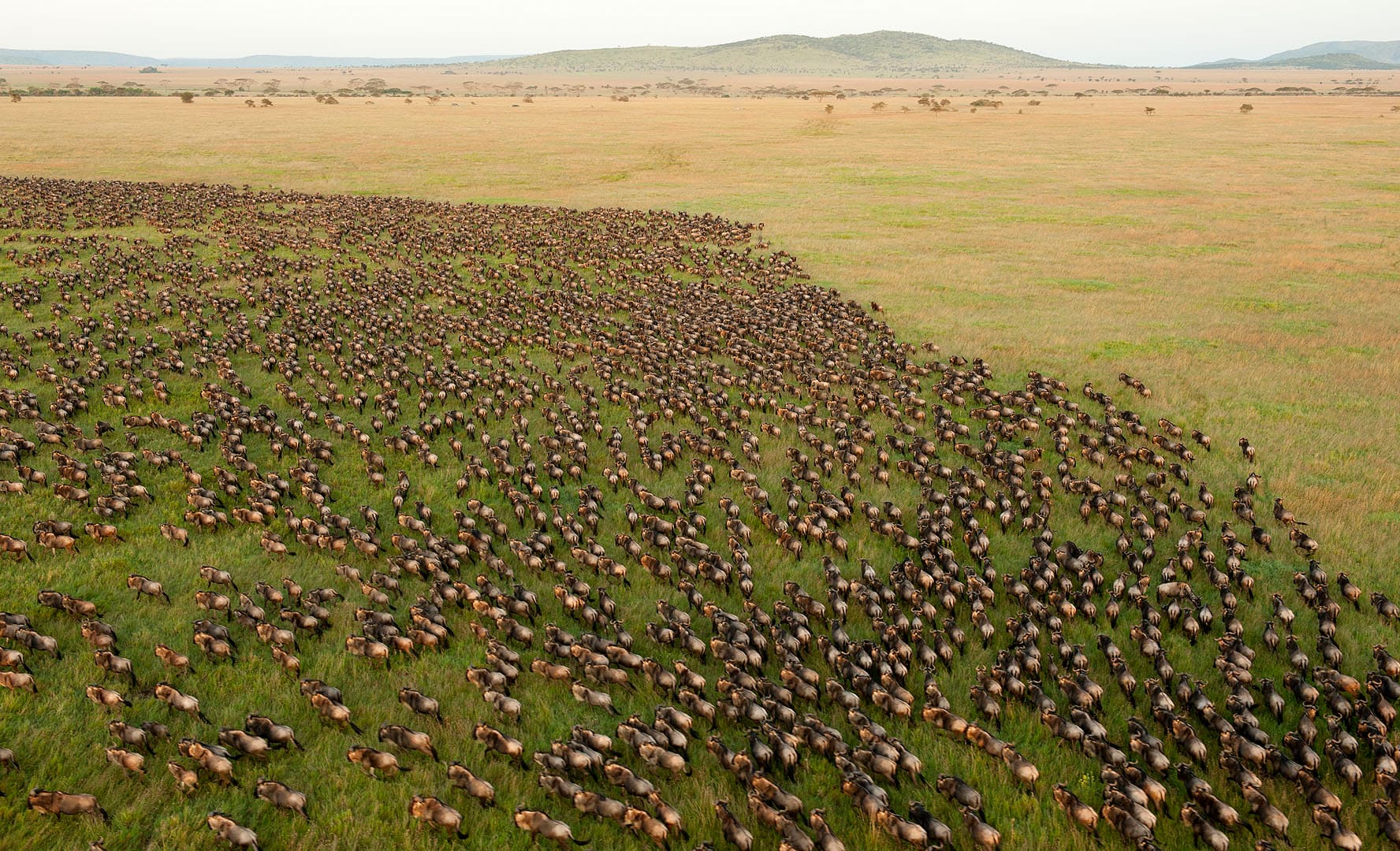
The migration is a continuous loop of roughly two million wildebeest, zebra and gazelle following rainfall around the Mara–Serengeti ecosystem. Understanding the loop is what lets you decide when to travel, because the river crossings are the hardest part to time and far from the only thing worth seeing.
December to March — the southern plains
The herds are on the short-grass plains of the southern Serengeti and the Ndutu area. In February, roughly half a million calves are born within a few weeks of each other. The predator activity that follows is the most concentrated on the continent, and it is far more reliably timed than the river crossings.
This is our recommendation for anyone who wants drama without gambling on a crossing.
April to May — the long rains
The herds move north and west. The grass is high, the roads are difficult, and the game viewing is the hardest of the year. Rates drop accordingly. We are honest with clients that this is not the window for a first safari.
June to July — the western corridor
The herds reach the Grumeti in the western Serengeti. The Grumeti crossings are smaller and less photographed than the Mara River, and considerably less crowded.
July to October — the Maasai Mara
The herds cross into Kenya. This is the classic window and the busiest. It is also the only time you might see a Mara River crossing — 'might' being the operative word: the herds cross when they cross, and no guide can promise it.
“We would rather you booked for the calving season and were certain, than for the crossings and were disappointed.”
How this affects booking
Camps in the right place at the right time sell out six to twelve months ahead. The migration does not move to suit availability, so the sequence matters: pick the phase you want, then find the camps, then set the dates.
- For calving and predator action: late January to February, southern Serengeti
- For the best odds on a Mara River crossing: August to September, Maasai Mara
- For fewer vehicles: June to July, western Serengeti
- To avoid: April and May, unless budget is the priority